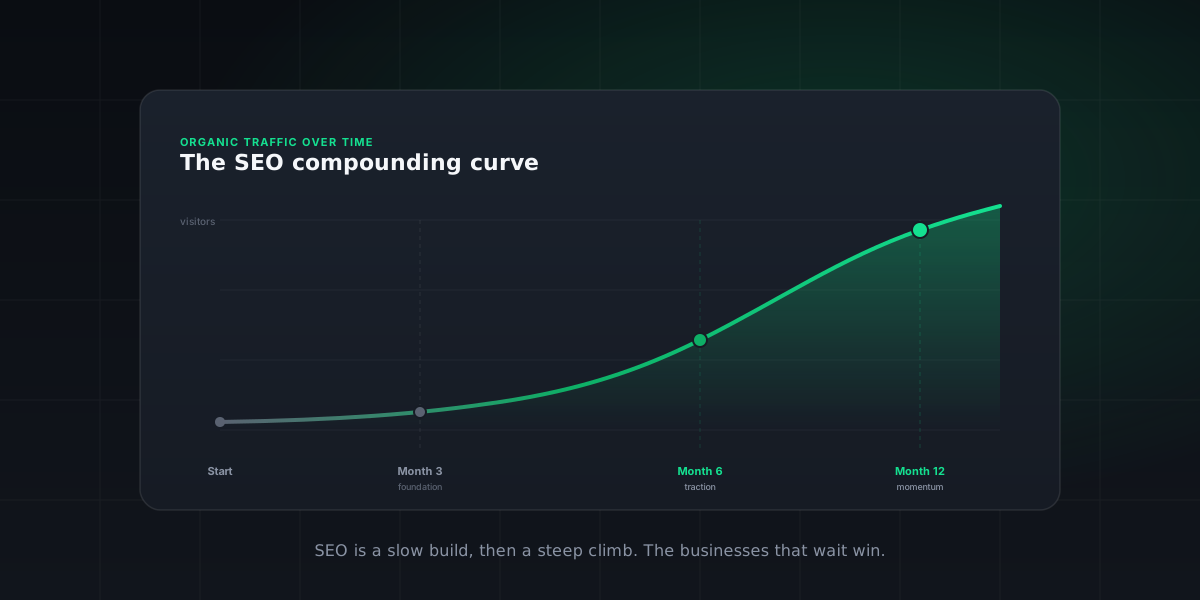
It is the first question almost every business owner asks before investing in content and SEO. How long until I see results? It is a fair question, and the honest answer is the one most agencies are afraid to give because it does not fit on a billboard. SEO takes time. Usually three to six months before you see meaningful movement, and closer to twelve months before the results compound into something that genuinely changes your business.
That answer scares some people off. It should not. The slowness is exactly why SEO is one of the best investments a local business can make. The wait is the moat. Most of your competitors quit before they reach the payoff, which means the ones who stay the course end up owning the search results for years.
Let us walk through what actually happens, month by month, so you know what to expect and can tell the difference between work that is on track and work that is genuinely stalled.
Why SEO is not instant (and paid ads are)
The fastest way to understand SEO timing is to compare it to paid advertising. When you run a Google or Facebook ad, you pay and you appear immediately. The moment you stop paying, you disappear just as fast. You are renting attention.
SEO is the opposite. You are building an asset. Google has to discover your content, evaluate it against everything else competing for the same searches, watch how real people interact with it, and slowly decide whether it deserves to rank. That evaluation does not happen overnight, and it should not. A search engine that instantly ranked brand-new content would be trivial to manipulate and useless to searchers.
So the tradeoff is simple. Ads are fast and temporary. SEO is slow and durable. The article you publish today can still be bringing in customers three years from now, long after an ad budget would have been spent and forgotten.
Months 1 to 3: the foundation phase
The first quarter is the part nobody enjoys, because the visible results are minimal. Under the surface, though, this is where everything important happens.
In these early months, the work is keyword research, competitor analysis, fixing technical issues on your site, and beginning to publish well-structured articles built around the questions your customers actually search. Google starts crawling and indexing the new content. You might see a few new keywords appear in Google Search Console, ranking somewhere on page four or five. That is normal and it is a good sign.
What you should expect by the end of month three is movement, not arrival. New pages indexed. A handful of keywords starting to register. Maybe a small uptick in impressions. If your site was brand new or had almost no content before, this phase can take the full three months just to lay groundwork. If you had an established site with some authority already, you may see faster early signals.
The mistake businesses make here is panicking. Three months in, the dashboard does not look exciting, so they assume it is not working and they pull the plug. That is precisely the wrong moment to quit, because the foundation you just paid for is about to start paying off.
Months 4 to 6: the traction phase
This is where it starts to feel real. The content published in the first quarter has been indexed and evaluated, and Google begins moving your best pages up. Keywords that were sitting on page four climb to page two. A few might break onto page one. Organic traffic begins a steady, noticeable climb rather than the flat line of the early months.
By month six, a local business doing this consistently typically sees real organic visitors landing on their site and, more importantly, starts getting the occasional inquiry that traces back to an article. The first time a new patient, client, or customer says they found you through something you published, the whole strategy clicks into place.
This phase rewards consistency above all. The businesses that published one or two solid articles every month in the foundation phase now have a small library working for them. The ones that published sporadically have less to show. Volume matters, but only when paired with quality and patience.
Months 7 to 12: the momentum phase
Somewhere in the second half of the year, SEO stops feeling like something you are pushing uphill and starts feeling like something with its own momentum. Your established articles hold their rankings and keep pulling in traffic without further work. New articles rank faster because your site has accumulated authority and trust. The content begins to compound.
Compounding is the entire point. Each new article does not just add its own traffic. It strengthens the whole site, supports the other articles through internal linking, and makes the next piece easier to rank. By month twelve, a business that started from near zero can be ranking on page one for a meaningful set of valuable local keywords, with organic search becoming a reliable and growing source of new business.
This is also when the math turns decisively in your favor. The cost of content stays roughly flat, but the traffic and leads it generates keep climbing. The return on each dollar spent gets better every month, which is the opposite of paid advertising, where each dollar buys roughly the same thing forever.
What makes SEO faster or slower
Timelines vary, and a few specific factors push them in either direction. Knowing them helps you set realistic expectations for your own situation.
- Your starting point. An established site with existing content and some backlinks will rank new content faster than a brand-new domain with no history.
- Your competition. A chiropractor in a small town faces far less competition than a personal injury lawyer in a major city. Less competition means faster rankings.
- Publishing consistency. Four quality articles a month builds momentum dramatically faster than one article every couple of months.
- Content quality and expertise. Articles built on genuine expertise, with proper structure and real depth, rank far faster than thin, generic content. This is where E-E-A-T matters.
- Technical health. A fast, well-structured, mobile-friendly site gives Google fewer reasons to hold your content back.
The cost of waiting to start
Here is the part that should motivate you. Because SEO takes months to mature, the best possible time to start was a year ago. The second best time is today. Every month you delay is a month further from the compounding payoff, and a month your competitors might be using to build the lead that becomes very hard to overtake later.
The business that starts publishing today and sticks with it will, a year from now, be reaping steady organic leads. The business that keeps waiting for a faster option will, a year from now, still be starting from zero. The timeline does not change. Only your start date does.
What a realistic first year looks like
To put it all together, here is the honest shape of a typical first year for a local service business that commits to consistent, high-quality content:
- Months 1 to 3: Foundation. Research, technical fixes, first articles published and indexed. Minimal visible traffic, early ranking signals.
- Months 4 to 6: Traction. Rankings climb, organic traffic grows steadily, first leads start arriving.
- Months 7 to 12: Momentum. Content compounds, page-one rankings accumulate, organic search becomes a dependable channel.
None of this requires gimmicks or secret tactics. It requires the right strategy, genuine expertise on the page, and the patience to let the work mature. The businesses that understand the timeline going in are the ones that stay the course and win.
Common questions about SEO timelines
